








Caring for lantana: pruning, fertilising & common diseases

The lantana does not require much care – so a lush, bright sea of flowers combined with bushy, healthy foliage can be achieved without much effort.

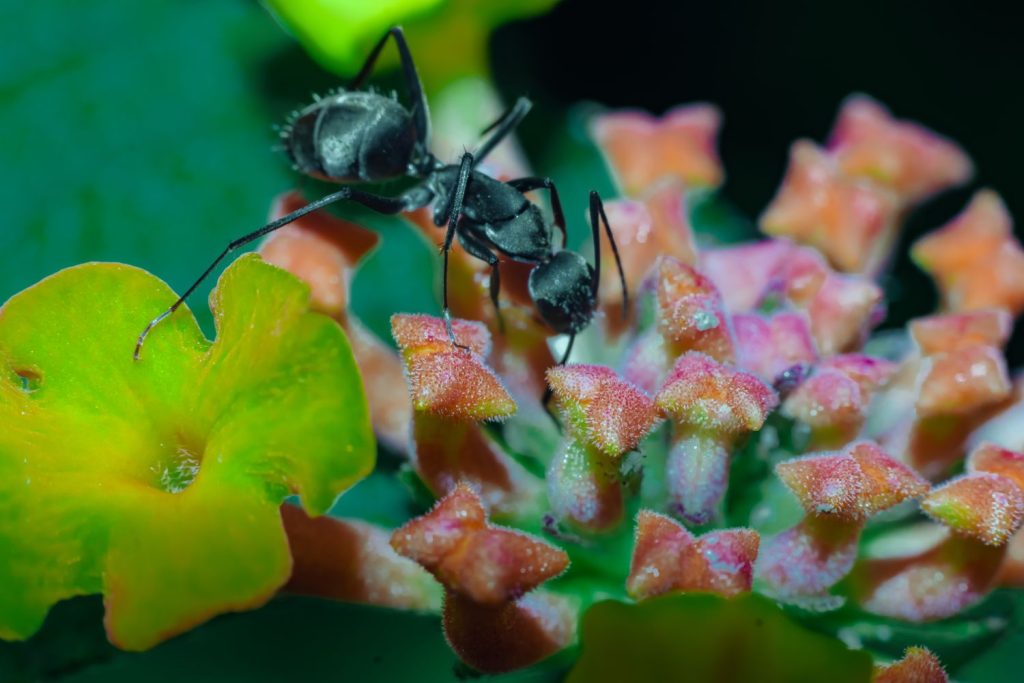
Trademarks of the Lantana include its colourful, changing blooms and its bushy, compact habit. In our latitudes, the lantana can be cultivated perennially only in tubs. If you want to enjoy the lush flowers and dense green foliage, then you should follow some tips. In the following article we explain how to prune and fertilise the lantana correctly and how to counteract troublesome diseases.
Caring for the lantana: watering
With its frugality, the lantana is one of the low-maintenance potted plants. Despite its high drought tolerance, the water requirement is basically high, so it is best to water the lantana regularly in the morning or evening. Before hot days, remember to ensure a supply of water, for example, with the help of clay watering cones. Since Lantana does not tolerate lime, it is best to use rainwater for watering. Despite the high water requirement, prolonged waterlogging must be avoided at all costs, otherwise the lantana will quickly suffer from root rot. Therefore, the container should have enough drainage holes, as well as a drainage layer of expanded clay, and the plant should be watered only moderately.

Correct fertilisation
In order to maintain flowering and growth of perennial lantana, adequate fertilisation is necessary. After the overwintering of the lantana, it must receive sufficient nutrients in the spring. A high-quality flower fertiliser such as our Plantura Liquid Flower Food is suitable for this. This primarily organic fertiliser is easy to add to the irrigation water and, with its balanced NK ratio, promotes flower development and growth of the lantana. Starting in March, the bush should be supplied with the fertiliser at intervals of 4 weeks until flowering. Since the plant requires a lot of strength for flowering and growth, it is advisable to fertilise the lantana every 2 weeks during the flowering period. From August or September, fertilisation is reduced again and stopped no later than the beginning of October to prepare the shrub for wintering.
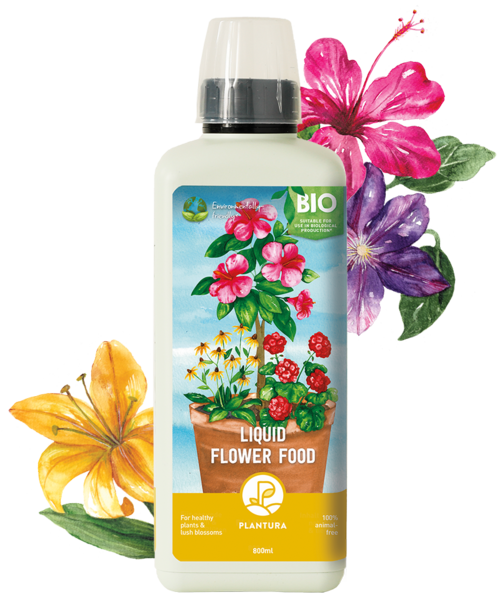


- Perfect for all flowers & balcony plants
- Liquid fertiliser for a lush blossom throughout the season
- Quick & easy application - child & pet friendly
Pruning lantana
The vigorous lantane is considered to be pruning tolerant. Since the young branches are more eager to bloom than old branches, it is advisable to cut back the shoots of the lantanas to 10-15 cm after wintering, that is, in March or April. This promotes the formation of new branches. In order for Lantana to invest increased energy in developing new flowers, wilted flowers should be removed to prevent fruiting. To compact the shrub, we recommend regular but light shaping of the lantana shoots. However, this should be done outside the flowering period, and you should remove only individual shoots. Such pruning promotes flower and shoot development and encourages the plant to grow bushier.

Repotting
As a rule, lantana florets should be repotted as soon as the roots penetrate the drainage holes of the pot. At a young stage, the bush is still transplanted every year, while for older plants repotting every 3 years is sufficient. It is best to repot them immediately after purchase, because the plant roots usually suffer from lack of space and nutrients in the substrate may already be depleted. This requires a pot, which should be only one pot size larger than the previous one. Lantana is best repotted in March after overwintering. For this purpose, use fresh substrate. A high-quality potting soil such as our Plantura Organic All Purpose Compost is ideally suited. With its slightly acidic to neutral pH, this peat-free potting soil provides the right environment for your lantana. Due to its moderate fertiliser content, the substrate provides the lantana with sufficient nutrients – without overfertilising – and thus promotes its development and flowering. However, to ensure adequate drainage, the soil should be loosened with 40% sand content.
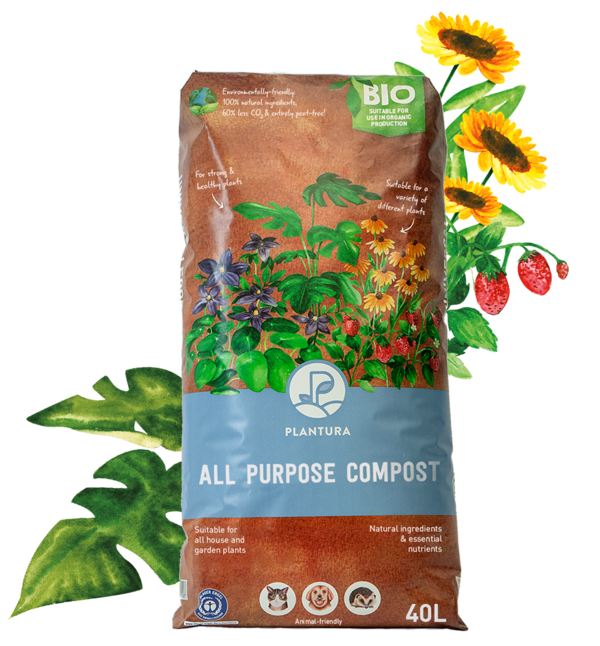
- Perfect for all your house, garden & balcony plants
- For strong & healthy plants as well as an active soil life
- Peat-free & organic soil: CO2-saving composition
Tip: Plants that remain in a pot for more than one year should be fertilised adequately each year. For this purpose, a granular fertiliser is recommended. Liquid fertilisers are less suitable due to their reduced phosphate content, otherwise a nutrient deficiency will occur in the substrate.
Common diseases and pests on lantanas
Although the lantana is an extremely hardy ornamental plant, some diseases or pests can plague it. Since the tropical lantana is not adapted to our northern latitudes, it must be sufficiently protected over winter. As overwintering temperature increases, the risk of unwanted infestation is higher.

In this case, the following pests and diseases can occur, but you can successfully repel them:
- Spider mites (Tetranychidae): The small, reddish-brown arachnids infest the plant, especially in dry and warm weather. They like to suck on the underside of the leaves, leaving bright spots and damaging the lantana. You can prevent them by regularly spraying with water.
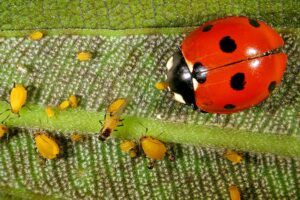
- Leaf aphids (Aphidoidea): infestation of green aphids is usually indicated by curled terminal leaves. For example, a beneficial neem preparation is suitable as a control agent. The active ingredient is beneficial to beneficial insects and is approved for use in organic farming.

- Root rot: Rot is promoted by waterlogging, overfertilisation as well as improper overwintering. Thus, different fungi can colonise first the root and then also the shoot, which is why the lantana subsequently dies. Root rot can be prevented by adequate drainage, proper fertilisation and suitable winter storage.
- Sooty mould fungi (Capnodiales): These fungi preferentially form a brown-black lawn on the excrement of aphids. With the help of a cloth soaked in detergent solution, the fungal turf can be removed, because it does not penetrate the leaf.
- Whitefly (Aleyrodes proletella): These are small white flies, only a few millimetres in size. Especially in warm temperatures, they multiply and damage the plant by extracting its sap. For control, yellow boards containing glue are suitable, to which the fly is attracted and sticks.

