








Baby’s breath: profile, planting & varieties

Baby’s breath is a very low-maintenance and delicate perennial and is truly stunning with its white or pink flowers, especially in rock gardens.
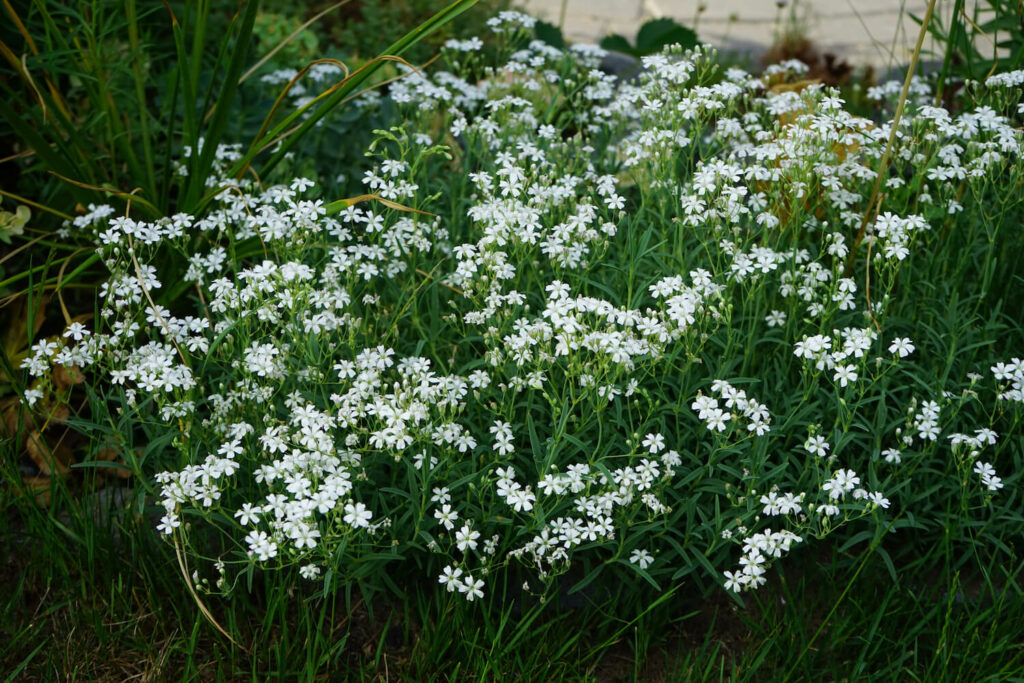
Delicate baby’s breath (Gypsophila) can be used as a truly stunning upright perennial or as a ground cover. It is also easy to care for and hardy. Find out here how and where to plant baby’s breath, how best to care for it and how to propagate it. We also present the most beautiful species of baby’s breath and explain how they differ.
Contents
Baby’s breath: origin and characteristics
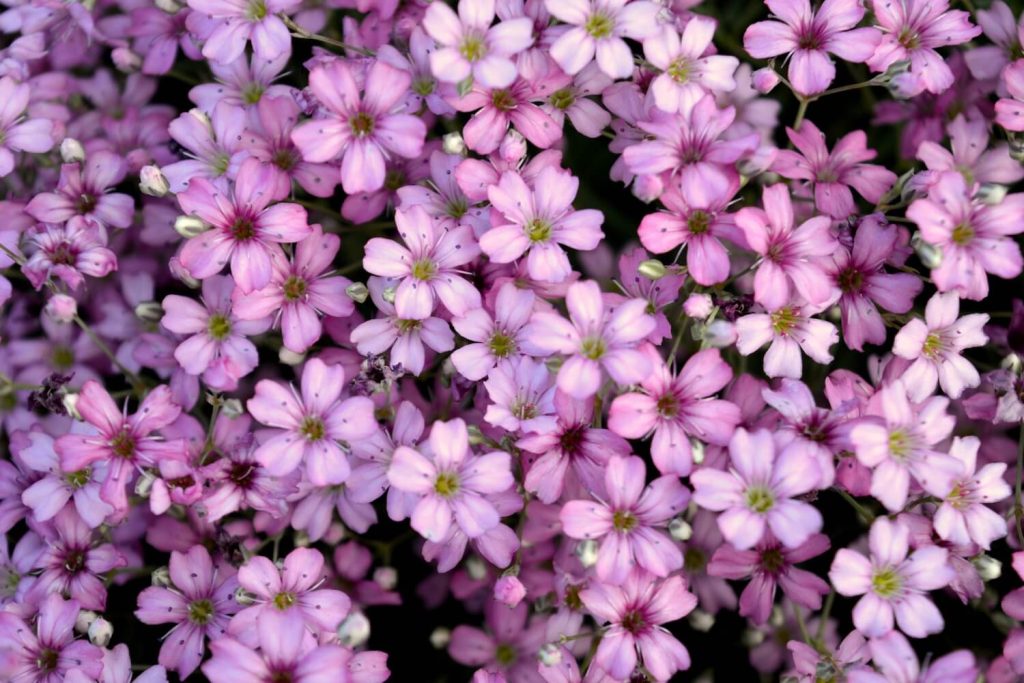
The genus baby’s breath (Gypsophila) belongs to the carnation family (Caryophyllaceae) and is native from South-Eastern Europe to Siberia. There it is found mainly in alpine habitats, on slopes or in dry, sandy steppes. The genus name of this delicate perennial is due to the fact that some of the approximately 180 species and varieties grow on gypsum rock. Baby’s breath can grow up to 100cm high. The perennial, herbaceous plant is richly branched and forms mutually arranged leaves, which are often fleshy, bluish green and linear to lanceolate. Their flowerheads are terminal and usually have hermaphrodite, white or pink panicle flowers. These exude a pleasant fragrance and become spherical capsule fruits after flowering. The seeds are kidney-shaped and flat. Gypsophila is an excellent bee and insect pasture.

Is baby’s breath perennial? While most species are perennial, there are also annual varieties.
When does baby’s breath flower? Depending on the species, the flowering times differ somewhat. However, all Gypsophila species flower between May and September.
The most beautiful species of Gypsophila
The species of the genus Gypsophila do not only differ in their flower colour. Their growth habit, height, flowering time and persistence also vary.
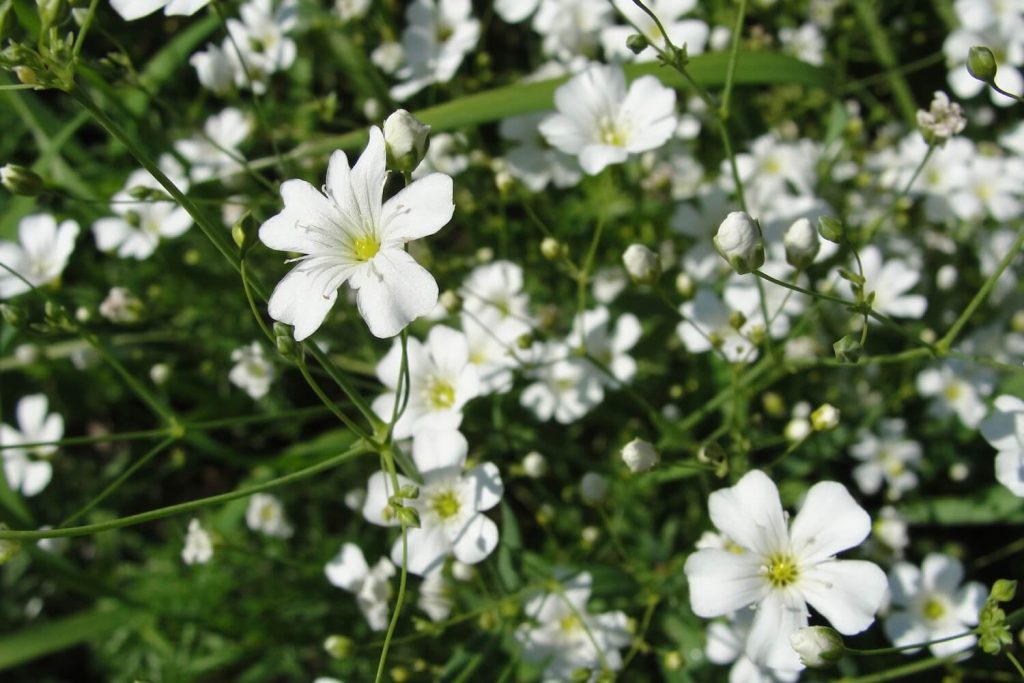
- Common baby’s breath (Gypsophila paniculata): White flowers; 80 – 100cm tall; flowering period July – August; perennial; planting distance of 70cm recommended.
- Gypsophila paniculata ˈBristol Fairyˈ: Double, white flowering; height up to 100cm; flowering period from July – September.
- Gypsophila paniculata ˈFlamingoˈ: Double, pink flowers from July – September; up to 120cm high.
- Gypsophila paniculata ˈSnowflakeˈ: Largely double, white flower formation; 70 to 100cm high; flowering period from July – September; generative propagation.

- Creeping baby’s breath (Gypsophila repens): White flowers; up to 10cm high; flowering period May – July; perennial; planting distance of 30cm recommended.
- Gypsophila repens ‘Rosa Schönheitˈ: Dark pink flowering; maximum height of growth 10cm; flowering period May – July
- Gypsophila repens ˈRoseaˈ: Light to dark pink flowers between May – July; up to 10cm high.
- Gypsophila repens ˈFilou Roseˈ: Pink flowering; maximum 15cm high; flowering period May – July
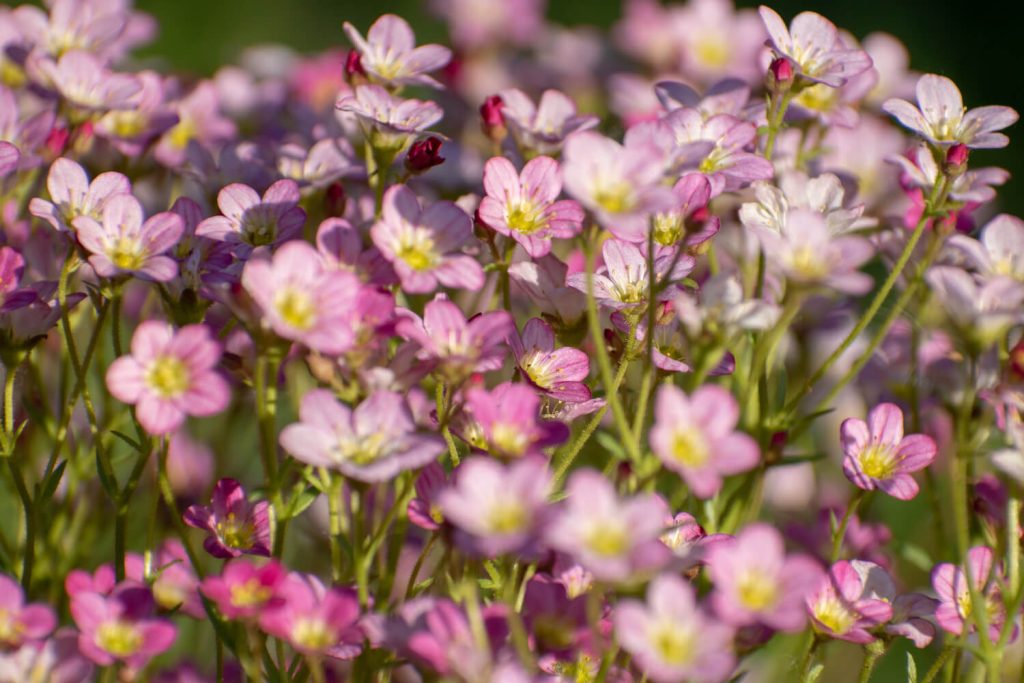
- Gypsophila Hybrid ˈCompacta Plenaˈ: Double, white flowers; up to 30cm high; flowering period June – August; compact growth; planting distance of 40cm.
- Gypsophila Hybrid ˈRosenschleierˈ: Equally double, but pale pink flowering from June – August; 30 – 40cm tall; compact; suitable spacing 40cm.
- Gypsophila petraea: White flower; growing height up to 15cm; flowering period June – August; planting distance of 30cm recommended.
- Gypsophila elegans: Also white flowers; up to 100cm tall; flowering period July – September; annual; leave 70cm between specimens.

- Gypsophila aretioides: Beautiful, white flower; height up to 5cm; flowering period June – August; slow-growing and carpeting; perennial; planting distance of 30cm.
Planting baby’s breath
Gypsophila has special demands on position and substrate, which means it cannot be planted in just any bed.
The right location for baby’s breath
As implied by its Greek name Gypso– like “gypsum” and –phila like “friend”, baby’s breath prefers moderately calcareous and base-rich soils. These should be very permeable and rather low in nitrogen. These plants thrive in a sunny, warm and dry locations. The delicate Gypsophila also needs a sheltered spot, as it can be damaged by strong winds.
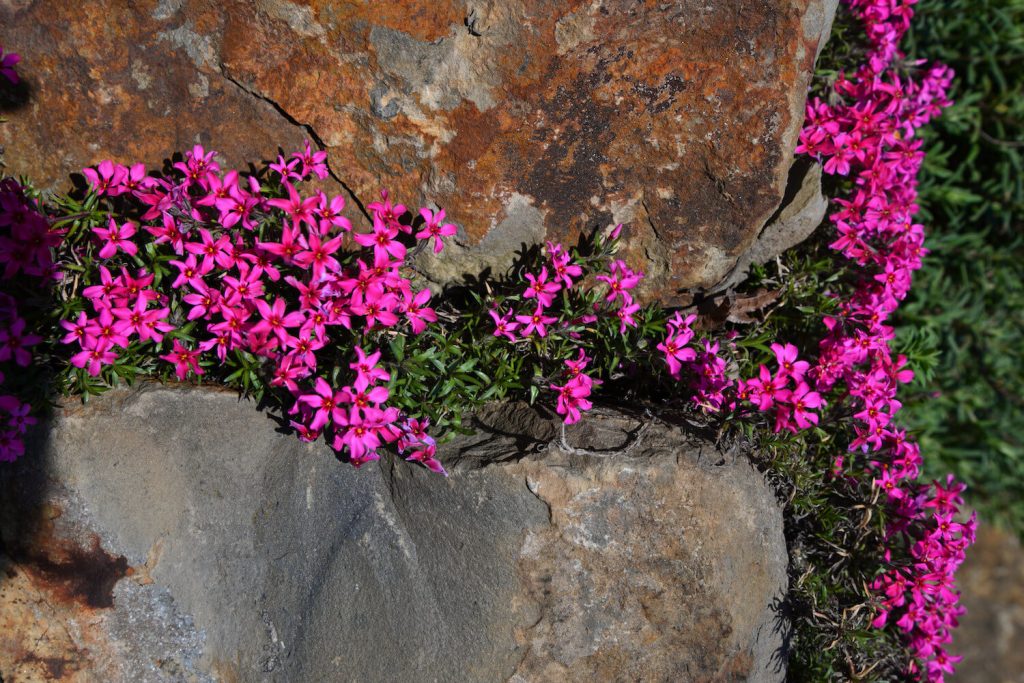
Tip: due to its long taproot and distinctive root system, baby’s breath serves as a soil stabiliser for dry, sandy slopes.
Gypsophila in the bed
Baby’s breath does not go that well in flower beds but feels more at home in rock gardens. Unlike most flowers, it needs few nutrients and accordingly prefers red valerian, sage or lavender as plant neighbours. To plant baby’s breath in the rock garden or bed, proceed as follows:
- Dig a planting hole approximately twice the size of the root ball.
- Mix the soil you have dug out with a little sand. If the soil is not permeable enough, small pebbles can be added.
- Place the plant sufficiently low that its leaves do not touch the ground.
- Fill the space around the root ball with the prepared soil.
- Press the substrate down lightly and water lightly.
The planting distance depends entirely on the species you are planting. Creeping baby’s breath, for example, forms large carpets, so in this case, a planting distance of about 30cm is recommended. Between varieties such as tall baby’s breath, a planting distance of about 70cm should be maintained.

Baby’s breath in a pot
The same applies to planting baby’s breath in a pot as in a bed. Also in this case, the substrate should not be too rich in nutrients. A suitable substrate is our peat-free Plantura Organic Herb & Seedling Compost. This contains the right nutrient composition and is well-draining. Make sure that the pot is about three times the size of the plant ball. In addition, it should always have a drainage hole and ideally a drainage layer at the bottom of the pot, as baby’s breath is very sensitive to waterlogging.
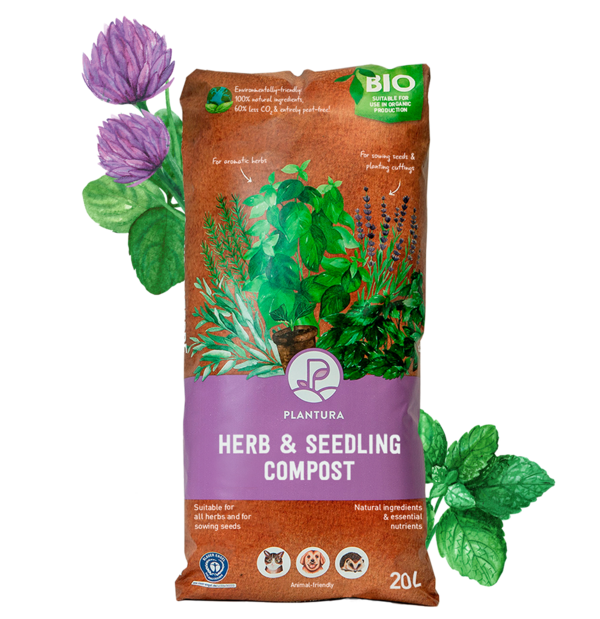


- Perfect for herbs as well as sowing, propagating & transplanting
- For aromatic herbs & healthy seedlings with strong roots
- Peat-free & organic soil: CO2-saving composition
Proper care: pruning and fertilising baby’s breath
Caring for baby’s breath takes very little time. Due to its low nutrient requirements, it does not need to be fertilised. In addition, it can live with longer periods of drought, so it rarely needs to be watered. The only thing this plant cannot cope with is waterlogging, which is why it is essential to prevent this by adding a drainage layer.
Pruning is not necessary, but pruning after the first flowering usually leads to a second flowering in late summer. To do this, cut back the withered flowerheads to the upper stem leaves. Planting partners such as grasses can conceal the bare patches between flowering phases.
Is baby’s breath hardy?
Yes, most species belong to climate zone Z4 and are therefore hardy down to -34 °C. These do not need any particular winter protection. During the first year, the plants should be protected with some foliage or a fleece until they are fully established.
Propagation
To propagate gypsophila, you can either sow it in spring or propagate it by cuttings or division. Some species also have hardy seeds, which allows them to reproduce naturally. If you do not want this to happen, you can collect the baby’s breath seeds in autumn and sow them in a controlled way the following year. They are ripe when they are brownish and hard. The best time for sowing is in March or April.
How to sow gypsophila:
- Fill seed trays with sowing soil such as our Plantura Organic Herb & Seedling Compost.
- Place seeds on substrate and cover lightly with soil gypsophila is a light germinator, so there should be very little soil on the seeds.
- Spray the whole thing with a little water.
- The seed tray should be placed in a bright, warm place at a temperature of about 15 °C.
- Cover the seedlings with foil and air every few days.
- It takes about 8 – 10 days until germination. When 4 – 5 leaves have formed, the seedlings can be planted as described above.

It is also possible to propagate baby’s breath in autumn with cuttings. To do this, cut off a young shoot about 10 to 15cm long. Remove the leaves from the lower part of the cutting and place it in potting soil. You can mix some sand underneath to increase the permeability. The substrate only needs to be lightly sprayed with water and then covered with a perforated film. The cuttings should be kept in a place that is bright and warm, but not hot. When the first new leaves form, the young plants can be planted out.
Is baby’s breath poisonous?
No, baby’s breath is not poisonous. Nevertheless, it should not be eaten. Excessive consumption can cause health problems such as nausea and digestive problems in both animals and humans.
Drying baby’s breath
To dry baby’s breath, hang it upside down by the stems in a dark, airy room. For example, a long raffia thread can be used for this purpose. After about 1 to 2 weeks the bouquet should be dry. Baby’s breath roots contain 20 to 30% saponins and, in the past, were used in medicine and to wash wool.
